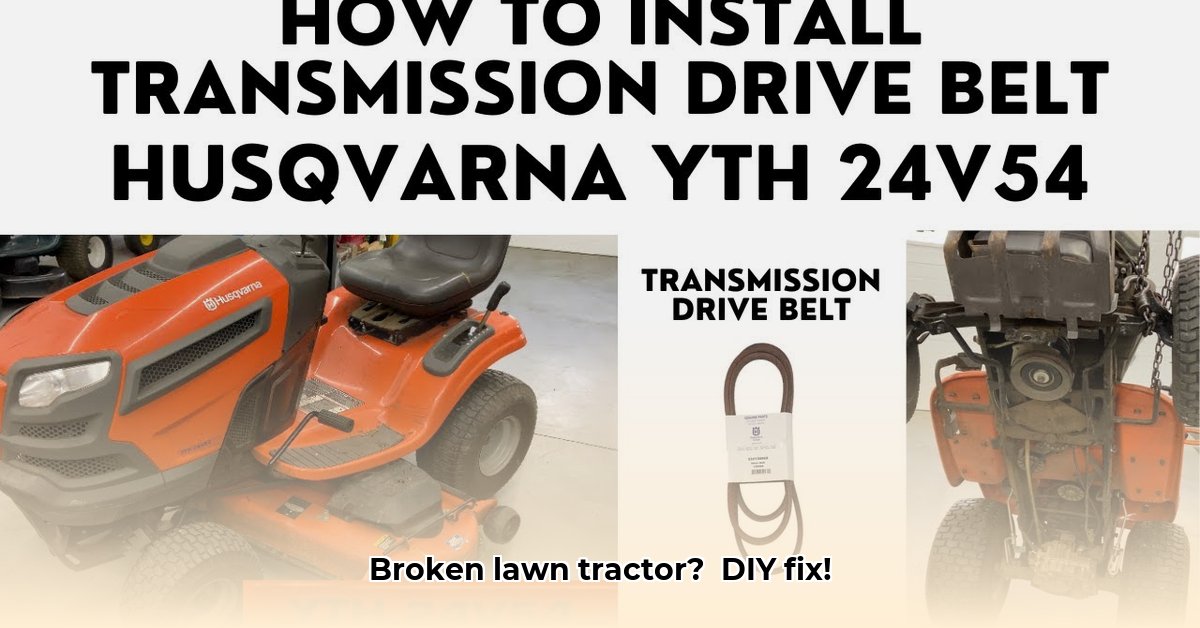
Replacing your Husqvarna lawn tractor's drive belt might seem intimidating, but this step-by-step guide will empower you to tackle this common maintenance task. This guide focuses on models like the YTH22V46 and similar Husqvarna tractors. Following these instructions will get your lawnmower back in action quickly and efficiently. For further part sourcing, check out these Husqvarna parts.
Tools and Materials: Gearing Up for Success
Before you begin, gather these essential tools and parts:
- Correct Husqvarna drive belt (Check your owner's manual or a Husqvarna parts dealer for the exact part number—this is crucial!).
- Socket wrench set (metric and standard sizes – your owner's manual will specify the sizes you need).
- Adjustable wrench(es).
- Work gloves (to protect your hands).
- Safety glasses (to protect your eyes from debris).
- Jack or ramps (optional, but highly recommended for easier access and safer working conditions).
Safety First: Prioritizing Your Well-being
Safety is paramount. Always disconnect the negative battery terminal before starting any work on your lawn tractor. This prevents accidental starts. Wear safety glasses and gloves throughout the entire process. If using a jack or ramps, ensure the tractor is securely supported and stable. Never work under a machine supported only by a jack.
Step-by-Step Drive Belt Replacement: A Detailed Guide
Follow these steps carefully:
Deck Removal: Consult your owner's manual for the specific instructions on removing your mower deck. Typically, this involves removing several bolts and pins. Take photos as you disassemble to aid reassembly. Why is this important? A poorly removed deck can cause damage to adjacent components.
Old Belt Inspection: Once the deck is removed, examine the old drive belt. Note its condition (cracks, wear, etc.) and how it's routed around the pulleys. What should I look for? Excessive wear, cracks, or fraying indicate the need for replacement.
Old Belt Removal: Carefully remove the old belt, noting its path around the pulleys. Take pictures to assist with the new belt installation. Why photograph the process? This serves as a visual reference for reinstallation, minimizing the risk of incorrect routing.
New Belt Installation: Install the new belt, following the same routing as the old one. Ensure it sits snugly in all the pulleys' grooves. What's the risk of improper routing? Incorrect routing can cause belt slippage, damage, or even engine failure.
Deck Reassembly: Carefully reassemble the mower deck, ensuring all bolts and pins are securely fastened. Why is tightness crucial? Loose fasteners can lead to deck vibration and damage.
Battery Reconnection and Testing: Reconnect the negative battery terminal. Start the engine and listen carefully for any unusual noises. What do unusual noises suggest? They might indicate an issue with the belt installation or other components.
Belt Tension Adjustment: Adjust the belt tension according to your owner's manual. The belt should have slight give when pressed; too loose causes slippage, while too tight leads to premature wear. What is the optimal belt tension? There is a Goldilocks zone; too little or too much will reduce operational efficiency.
Troubleshooting Common Problems: Addressing Potential Issues
- Belt slippage: Check belt tension and routing; replace if excessively worn.
- Belt breakage: Inspect pulleys and associated components for damage; replace the belt.
- Unusual noises: Check belt routing and tension; investigate for other potential mechanical issues.
Conclusion: Maintaining Your Husqvarna Lawn Tractor
Regular drive belt inspection and, when needed, replacement are crucial for optimal performance and longevity of your Husqvarna lawn tractor. Remember to always consult your owner’s manual for model-specific instructions and safety precautions. Proactive maintenance saves time and money in the long run. For additional support, visit the official Husqvarna website 1.